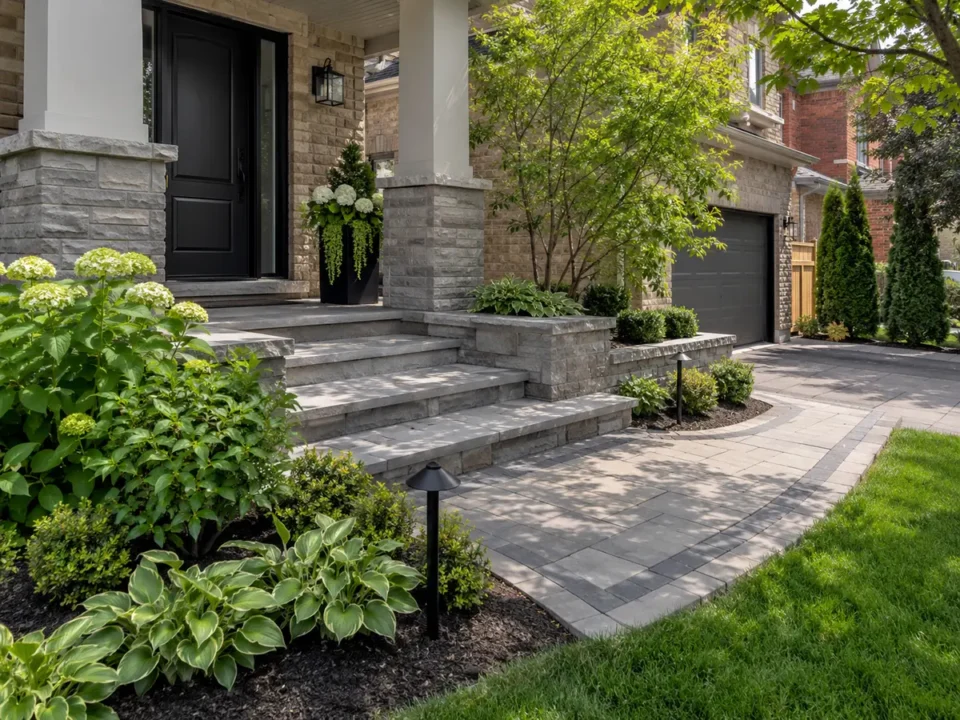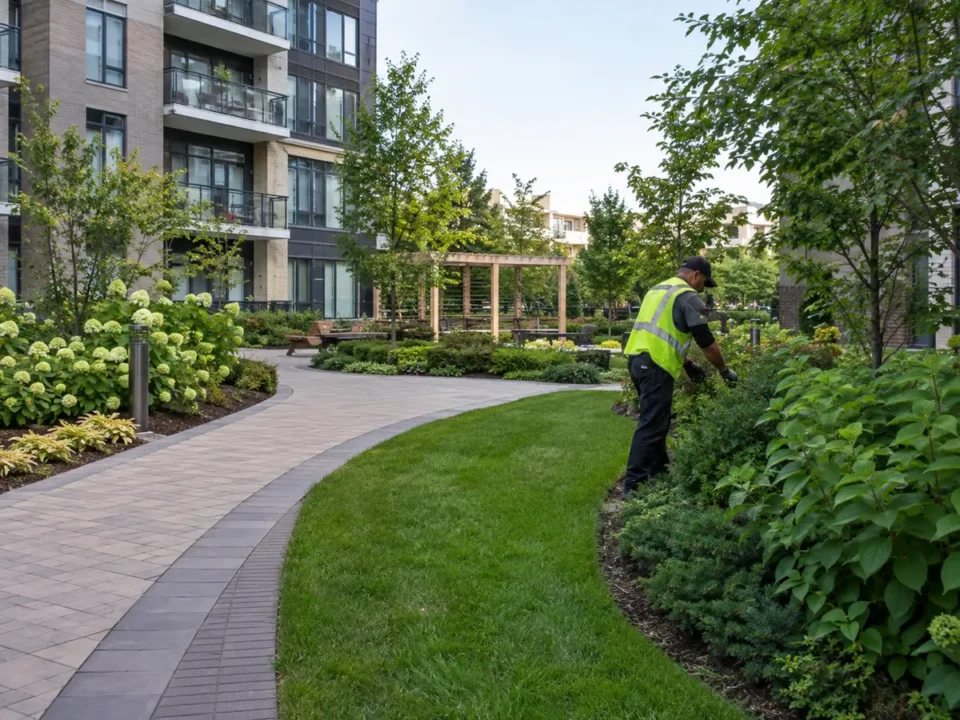
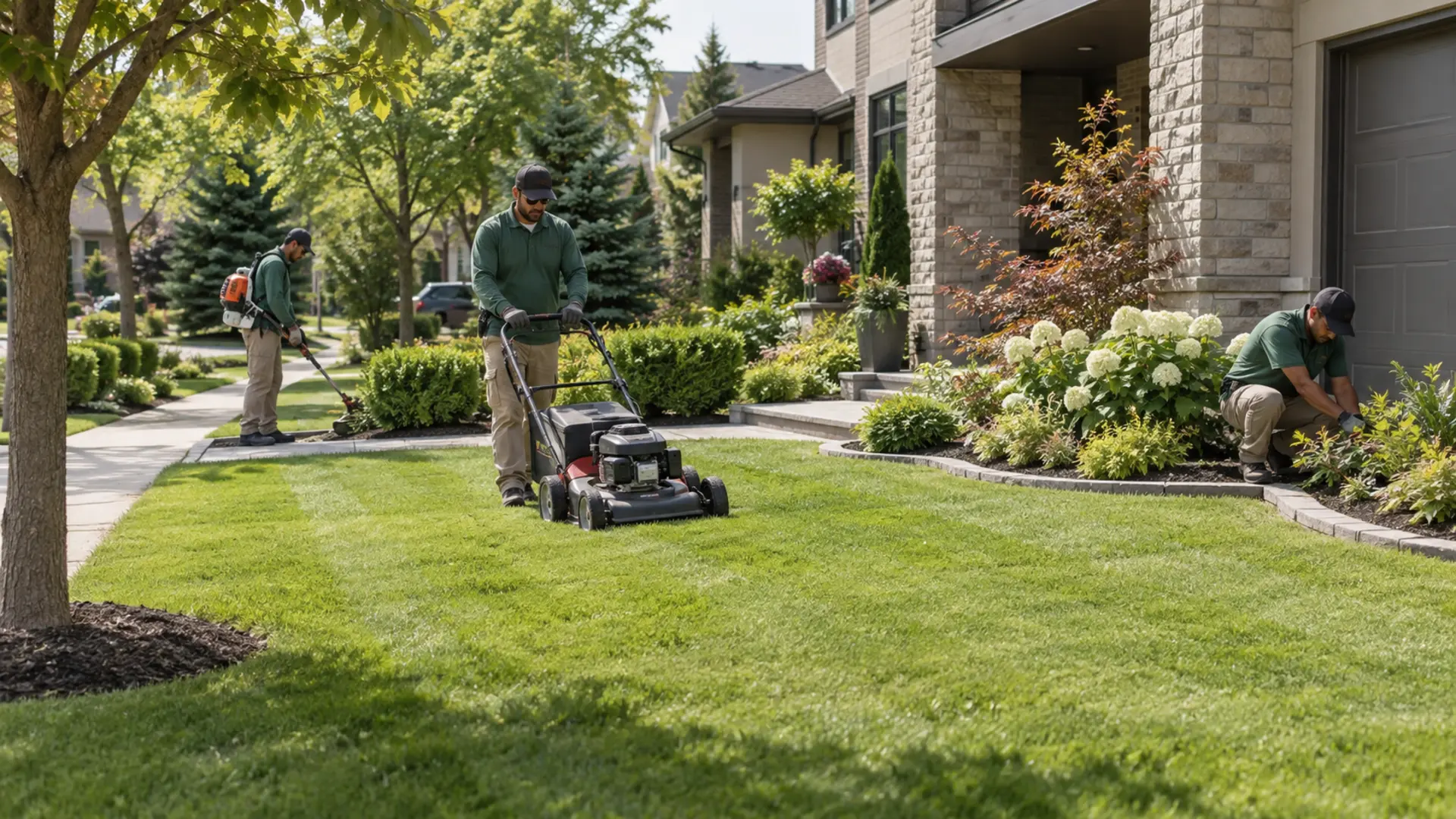
Direct answer: Organize recurring lawn, bed, trimming and cleanup work around the appearance, safety and access priorities of the site.
What commercial property maintenance should accomplish
A useful maintenance agreement identifies service areas, frequency, included tasks, reporting and how additional work is approved. Vague promises lead to gaps around islands, entrances, loading areas and property boundaries.
A useful quote separates the visible finish from the preparation, access and connected restoration required to support it. That makes comparisons clearer and reduces the chance that an attractive surface is installed over an unresolved property condition.
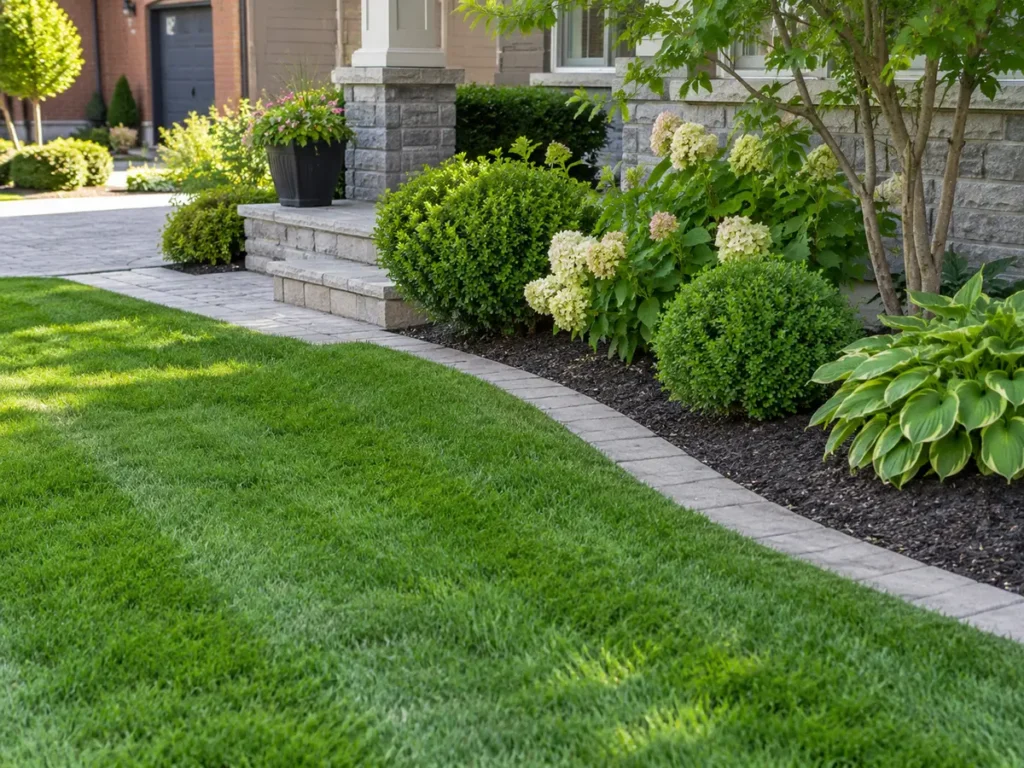
What a complete scope can include
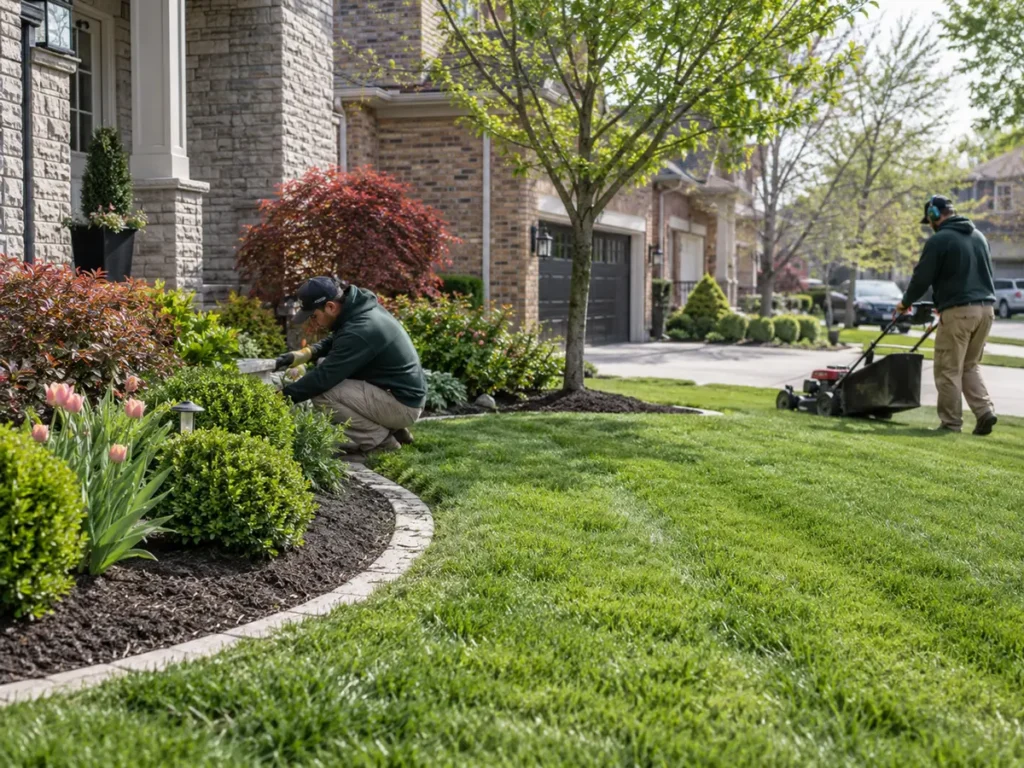
The final scope depends on the property, but the following items belong in the conversation before work begins:
- Mowing, edging and turf care
- Bed weeding and pruning
- Litter and seasonal cleanup
- Entrance and visibility checks
- Landscape enhancement options
- Service records and communication
Items outside the confirmed scope should be identified just as clearly. That distinction is especially important when several services meet at one edge, elevation or utility route.
Decisions that shape the project
Good decisions come from the site rather than a preset package. These factors change materials, sequence, labour, approvals and the amount of restoration required:
- Exact maintained areas
- Visit frequency and weather delays
- Tenant and public access
- Irrigation responsibility
- Authorization for extra work
How to compare practical options
Define service areas, frequency or trigger, documentation, exclusions and authorization for extra work. Commercial scopes should distinguish routine visits from corrective repairs or landscape enhancements that require separate approval.
Ask how each option changes preparation, installation sequence, future repair and ongoing care. The most suitable choice is the one that performs the required job on this property—not automatically the most expensive material or the product used at a different home.
Plan connected work in the right order
Recurring property work needs defined service areas, visit expectations, escalation rules and a clear distinction between routine care and additional improvements.
The usual planning order is to confirm access and removals, locate utilities, establish grades and drainage, complete structural or underground work, install hard surfaces, prepare soil, and finish with planting or lawn restoration. The exact order changes with the project, but completed finishes should not be disturbed to reach work that should have happened first.
Mississauga property considerations
Commercial sites in Mississauga often combine road-salt exposure, parking-lot heat and compacted planting areas. Maintenance should include observation of declining areas rather than repeating the same visit regardless of condition.
Requirements can change and different approvals may apply to the same property. Confirm the current rule with the responsible authority before construction rather than relying on a general page as project approval.
Related landscaping services
Commercial Property Maintenance often connects to other work in the property care & commercial group. Review the pages below when the project crosses surfaces, grades, planting or seasonal care.
Prepare for a clearer estimate
Photograph the full work area, important transitions and the access route from the street. Include approximate measurements, property type, desired timing and anything known about utilities, drainage, boundaries, surveys or approvals.
- Identify the result that matters most
- Separate existing damage from desired upgrades
- Point out fixed elevations, doors, gates and structures
- List connected work being considered now or later
- Ask the quote to state preparation, restoration and exclusions
Clear information does not replace an on-site review where one is required, but it helps distinguish a straightforward request from a property condition that needs additional investigation.
Questions property owners commonly ask
What should a commercial maintenance quote define?
It should identify the property areas, included tasks, expected frequency or service model, debris handling, exclusions, communication route and how extra work is approved.
What should be checked before planning commercial property maintenance?
Start with existing conditions, access, grades, utilities, boundaries and any connected work. Materials and appearance should follow those practical checks rather than hide them.
Can this work be coordinated with other landscaping?
Yes. Connected work is often more efficient when drainage, elevations, underground services and structural elements are resolved before lawns, planting and finished surfaces.
What information helps with an estimate?
Provide the property address, photos, the condition you want to change, approximate area, desired timing, access limitations and any known survey, permit or utility information.