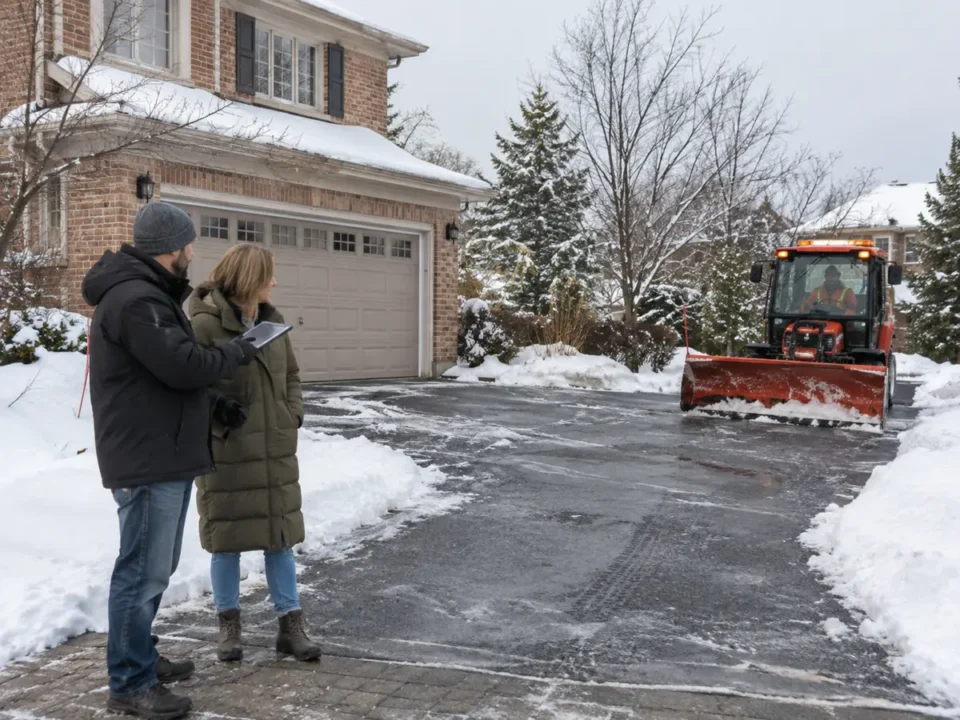
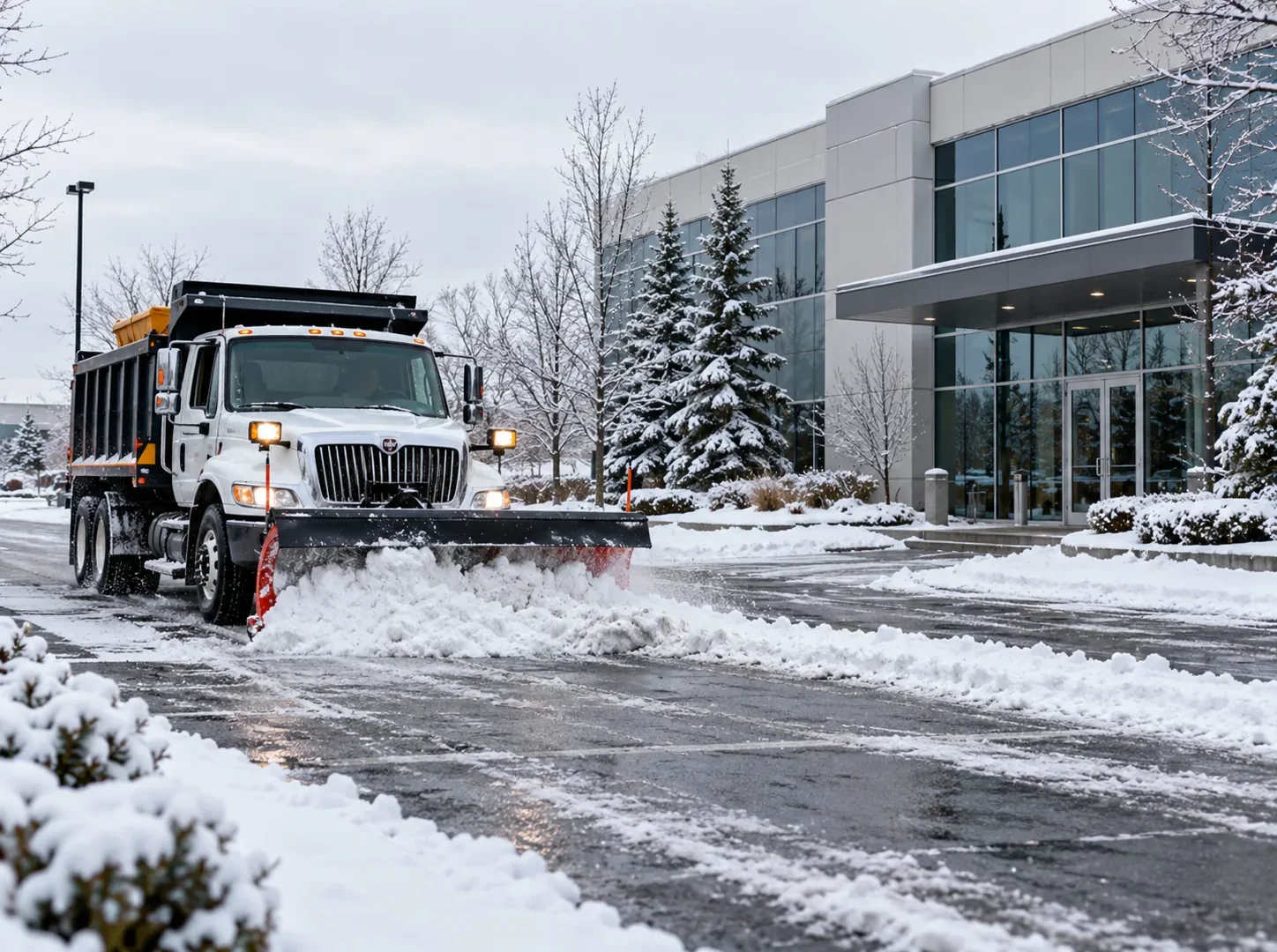
Direct answer: Snow removal and ice management for commercial properties should be planned as two connected services: clearing vehicle and pedestrian areas, then managing slippery conditions, refreeze and priority routes according to a defined site plan.
Choose the winter service you need
A winter plan starts before the first storm
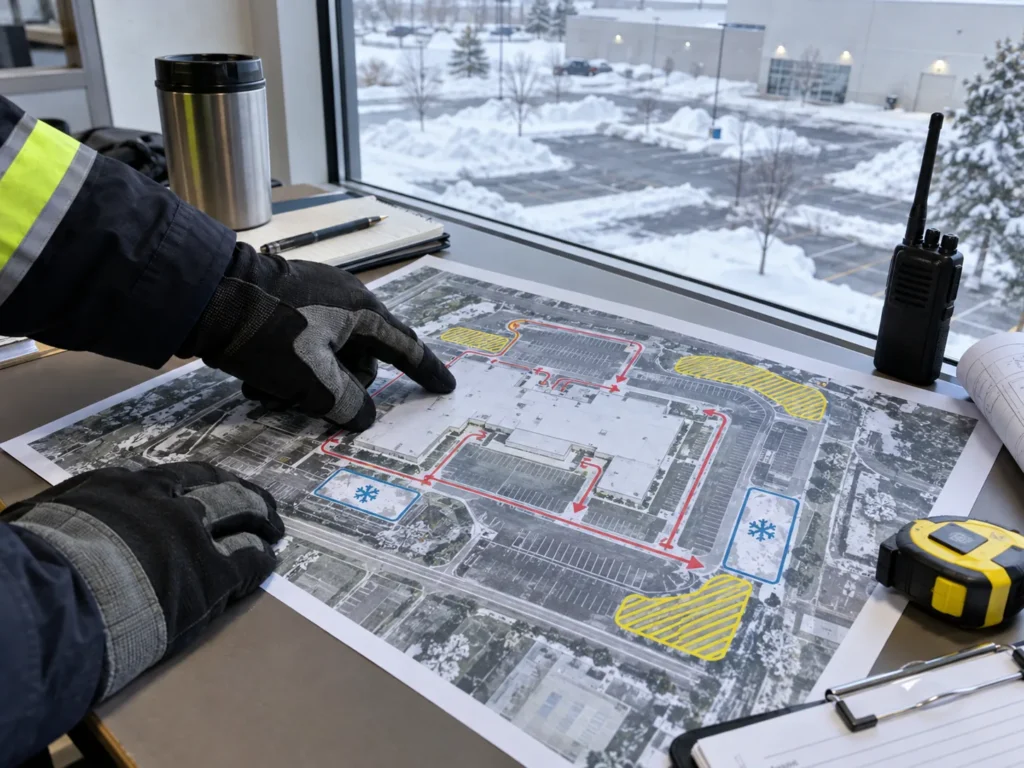
The practical work begins with a preseason view of the property. Parking lanes, entrances, accessible spaces, walkways, curb ramps, loading areas, fire routes, drains, gates and obstacles should be identified while they are still visible. The plan should also show where snow can be stored without blocking sightlines, pedestrian routes, parking access or spring drainage.
That site record gives the contractor and property contact the same reference point. It can distinguish the first areas that must open from secondary areas, identify equipment limitations and document objects that may disappear beneath accumulated snow.
Snow clearing and ice management are related—but not identical
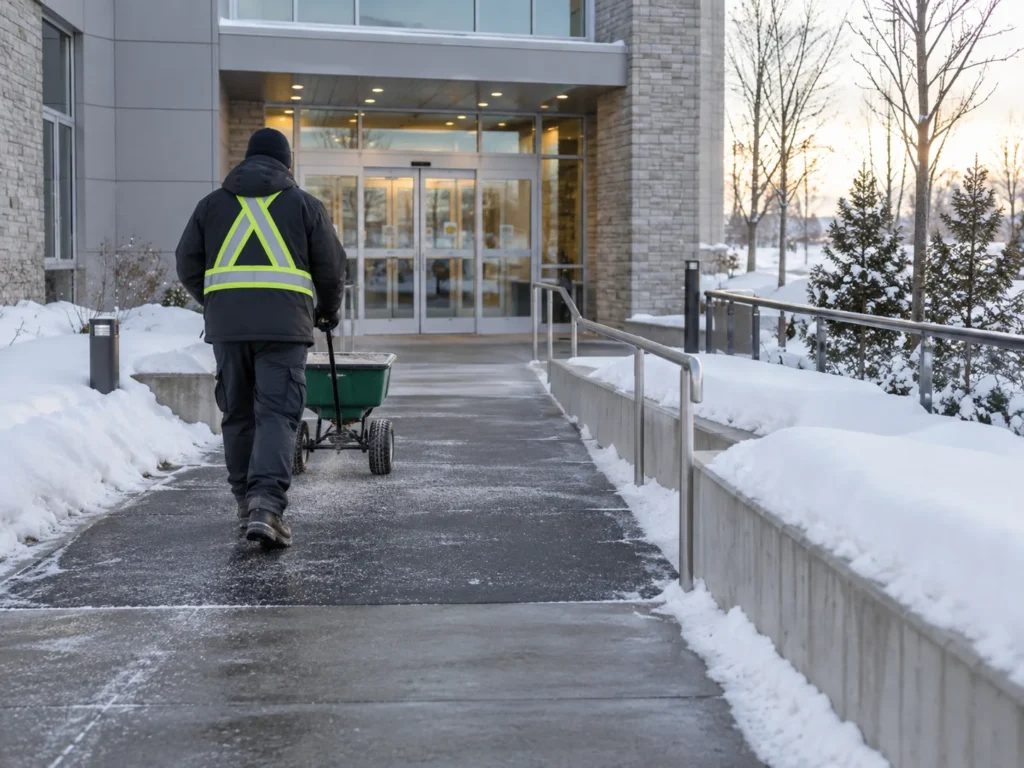
Plowing or shovelling removes accumulated snow from defined surfaces. Ice management addresses compacted snow, freezing rain, meltwater and refreeze that can remain or return after clearing. One service does not automatically describe the other, so the agreement should state which areas receive each treatment and what conditions activate additional attention.
Temperature, pavement type, shade, drainage, traffic and material limitations all affect treatment decisions. More salt is not automatically a better result. The product, amount and timing should suit the conditions, agreed service model and sensitive surfaces or planting around the application area.
What a commercial snow-removal scope should define
- The exact vehicle, parking, loading, sidewalk and entrance areas included
- The snowfall or site-condition trigger and how it is measured
- Priority routes, operating hours and expected service sequence
- Plowing, shovelling, equipment and handwork responsibilities
- Approved snow-storage areas and when relocation requires separate authorization
- Salting or ice-management inclusions, priority areas and material expectations
- Communication contacts, service records and escalation procedures
- Known obstacles, access restrictions, gates, drains and surface limitations
Plan the property by priority route
A single parking-lot description is rarely enough. A useful site map separates vehicle entrances, main drive aisles, accessible parking, public doors, employee or tenant entrances, loading routes, garbage areas, emergency access and connecting sidewalks. The order should reflect how the property operates rather than assuming every surface has the same priority.
Pedestrian areas require their own review because stairs, ramps, curb transitions, narrow walks, canopies and drainage points may need different equipment or handwork. Snow pushed from one area should not create a new obstruction or meltwater problem in another.
Triggers, visits and changing winter conditions
Commercial agreements can use different service models, including a defined accumulation trigger, per-visit work, seasonal arrangements or combinations for separate tasks. The important point is that the activating condition, included work, additional visits and exclusions are understandable before winter.
Conditions can also change after the initial service. Windrows from municipal plows, drifting, freezing rain, daytime melt and overnight refreeze may affect a property after snow has been cleared. The scope should explain which conditions are included automatically and which require observation, authorization or a separate request.
Snow storage affects visibility, drainage and future capacity
The easiest place to push the first snowfall may become the wrong location after several events. Piles can narrow parking areas, hide signs or vehicles, block sightlines, cover drains, obstruct accessible routes and release meltwater across pavement. Storage zones should be selected with the whole season in mind.
Where on-site capacity is limited, the agreement should explain how relocation or hauling is requested and priced rather than assuming it is part of routine plowing. The site plan should also protect areas where heavy piles could damage planting, curbs, lighting or other landscape features.
Documentation and property communication
Commercial properties may involve owners, property managers, tenants, facility staff and after-hours contacts. The request should identify who can authorize extra work, how access changes are communicated and where service records should be sent. A defined communication route helps avoid conflicting instructions during an active weather event.
Service documentation can record the property, date, approximate timing, task and observed condition according to the agreed process. It does not replace property-owner responsibilities or guarantee that every surface will remain continuously free of winter conditions, but it supports clearer administration and follow-up.
Winter conditions in Mississauga
Mississauga winter service must account for more than deep snowfall. Freeze-thaw cycles, wet snow, freezing rain, shaded entrances, road-salt exposure and meltwater near drains can create changing conditions across the same property. Busy commercial sites may also need work coordinated around deliveries, customers, tenants and parked vehicles.
The property-specific agreement should define realistic service areas and responsibilities without relying on broad claims about constant availability or guaranteed surface conditions. Weather, site access and current conditions remain important parts of each event.
Prepare a useful winter-service request
Send the property address, property type, operating hours, priority entrances, approximate parking and walkway areas, photos and any existing site map. Mention gates, loading schedules, accessible routes, unusual surfaces, limited snow-storage capacity and the person authorized to approve additional work.
- Photograph the property before snow covers curbs and obstacles
- Mark entrances, sidewalks, ramps, loading areas and fire routes
- Identify where snow has been stored successfully or unsuccessfully before
- Explain the desired trigger or ask for the available service model
- State whether salting and ice management must be included
- Provide one primary and one backup winter contact where possible
Snow-removal questions
Is actual snow removal included here?
Yes. The Commercial Snow Removal service covers plowing and clearing planning for defined vehicle and pedestrian areas. It is listed separately from Commercial Salting & Ice Management so both services are visible.
What is a snow-removal trigger?
It is the snowfall amount or site condition that activates a defined service under the agreement. The trigger, measurement method, included areas and treatment of additional visits should be confirmed before winter.
Does snow removal automatically include salting?
Not necessarily. Clearing and ice management are connected but distinct tasks. The scope should state where and when materials are applied and whether repeat treatment or refreeze attention is included.
Can snow be piled anywhere on the property?
No. Storage should protect entrances, accessible routes, visibility, parking function, drains, landscaping and future capacity. Limited sites may need a separate relocation or hauling plan.
What information helps with a commercial winter estimate?
Provide the address, site map or photos, included parking and walkway areas, operating hours, priorities, storage limits, trigger expectations and whether salting and documentation are required.