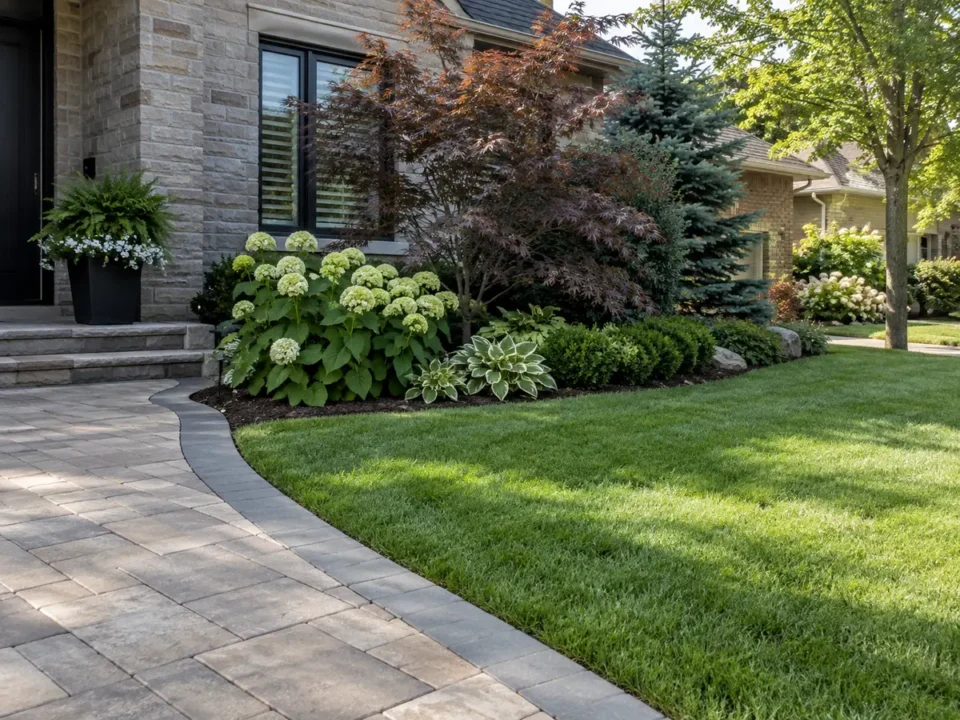
Direct answer: Replacing grass without correcting the reason it failed can reproduce the same thin, wet or stressed lawn.
Begin with a simple property record
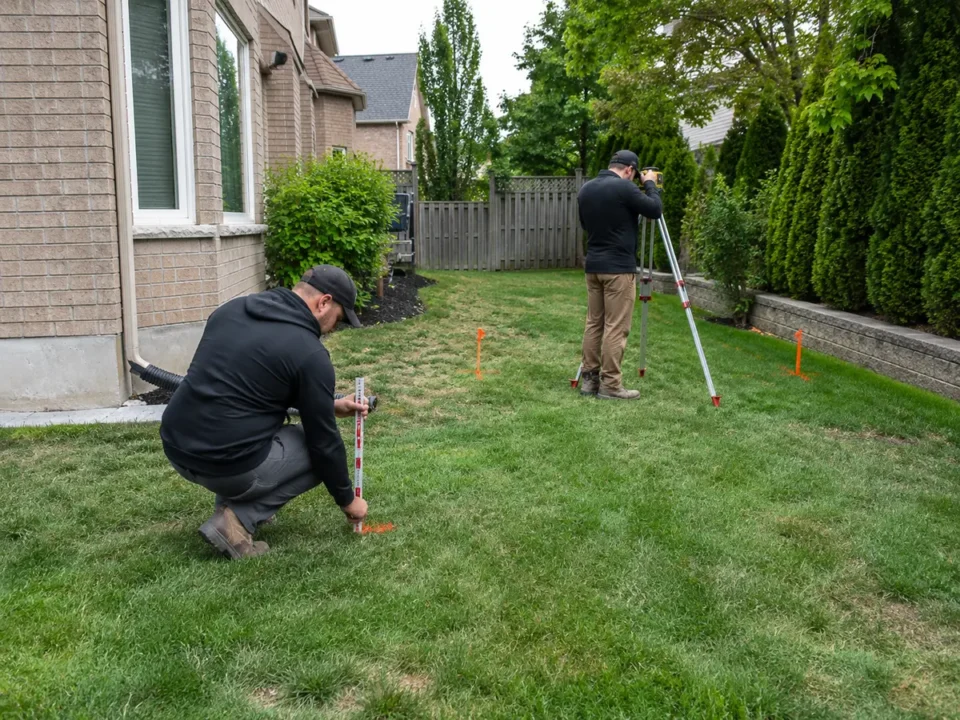
Before comparing products or prices, record what is happening now. Take wide photos and close details, measure the main area, note doors, gates, downspouts, utilities, trees and fixed elevations, and observe how the space changes after rain or during normal household use.
That record makes it easier to explain the same scope to more than one contractor. It also reveals assumptions that need confirmation instead of allowing each quote to describe a different project.
Identify the failure pattern
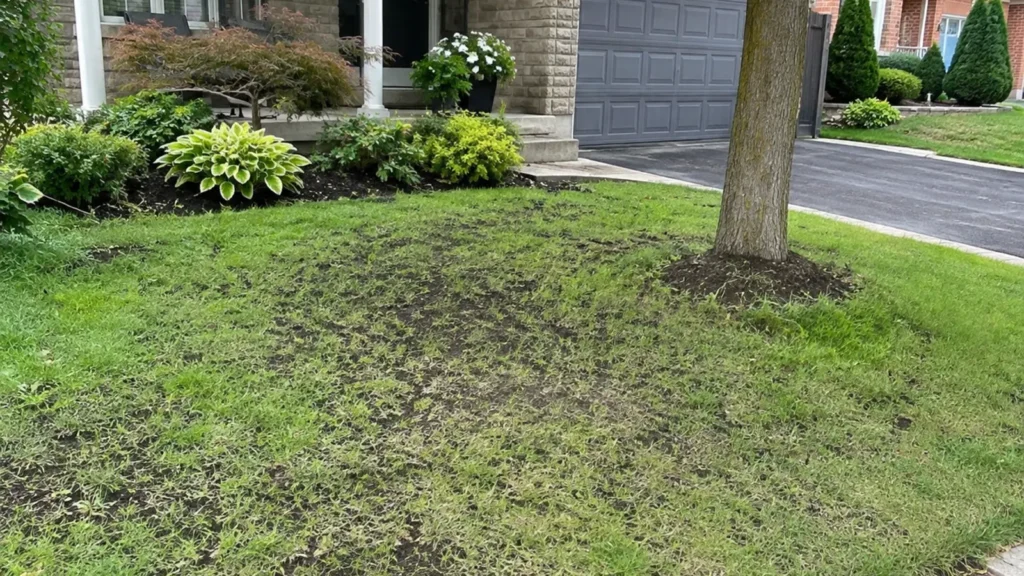
A uniformly dry lawn suggests a different issue than a wet low corner, thin strip under a tree or worn route between doors. Map the pattern before removal.
Check how quickly the turf declined and whether the problem changes after rain, heat, leaf-out or heavy use.
Look below the old turf
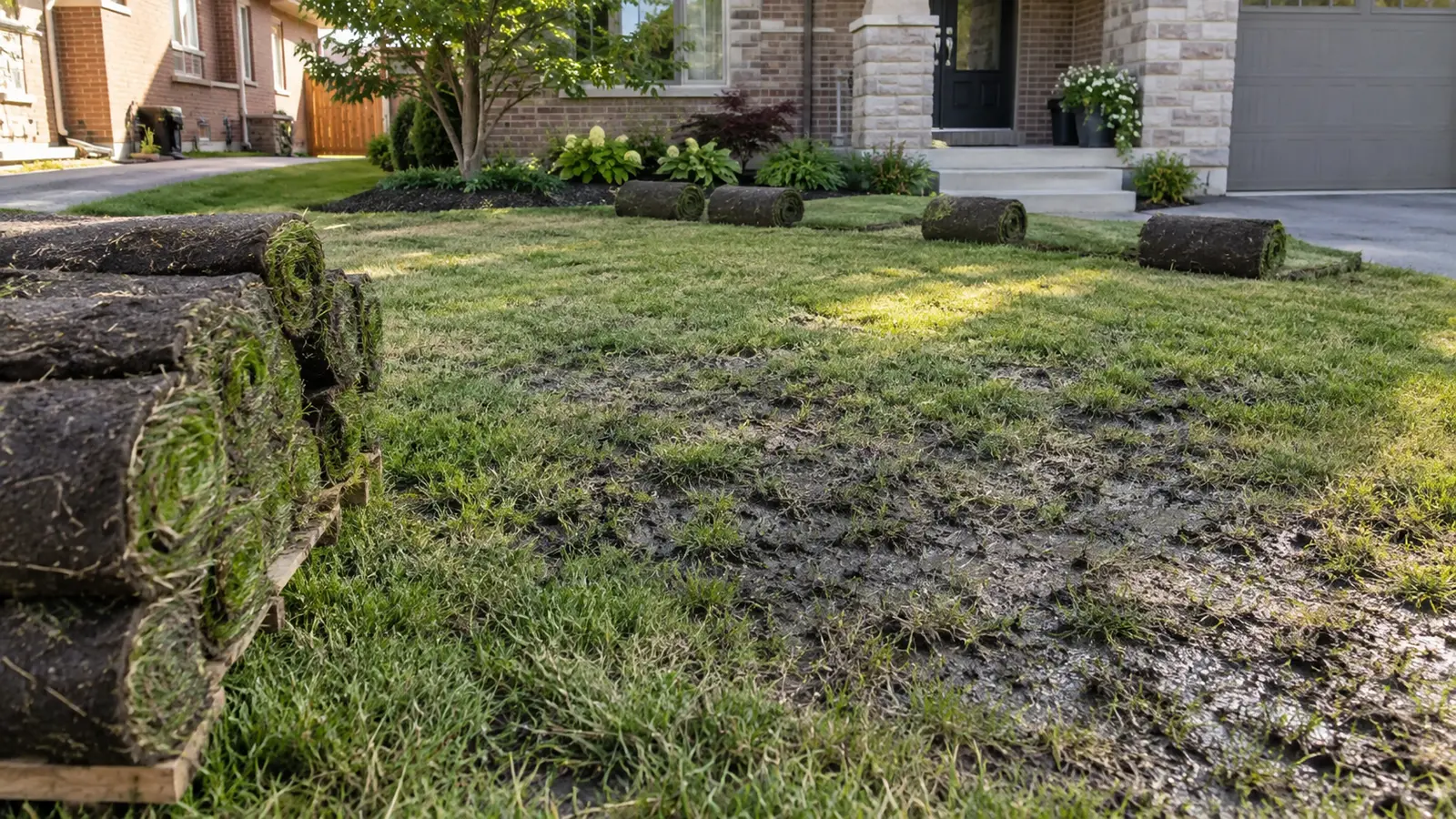
Shallow topsoil, construction debris and compaction restrict roots and water movement. Removing grass without improving the growing layer leaves the new sod dependent on the same weak base.
Final soil preparation should create a consistent, workable surface at the correct finished grade.
Correct grade and ponding first
Sod follows the surface beneath it. Low areas remain low, and water directed from roofs or hardscape can continue saturating the roots.
Finish drainage work and allow for settlement before laying the final lawn surface.
Match grass to light and roots
Kentucky bluegrass prefers stronger sun, while fescue mixes may tolerate somewhat more shade. No common lawn thrives in deep shade with heavy root competition and dry soil.
Where the site cannot support turf, a planted bed, path or other treatment can be more durable than repeated replacement.
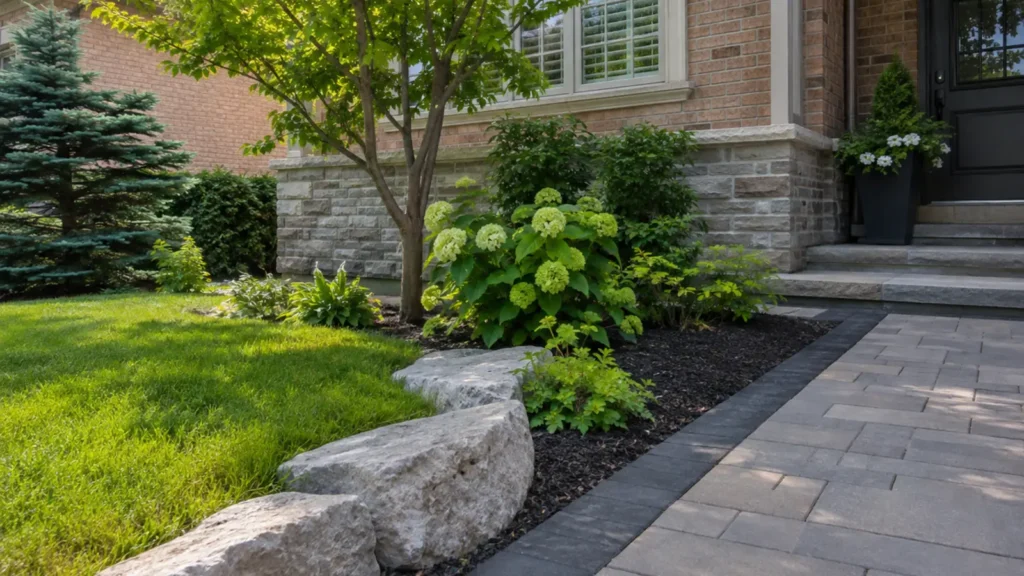
Install tight joints on prepared soil
Sod should arrive fresh, be installed promptly and fitted with staggered, tight seams. Air pockets, overlapped edges and dry strips delay root contact.
Edges near pavement dry faster and may require extra attention during establishment.
Water for establishment, not permanent saturation
New sod needs consistent moisture while roots enter the soil, but standing water and constantly saturated ground reduce oxygen. Frequency should change with weather, soil and rooting.
Lift an edge gently to observe root progress rather than relying only on surface colour.
Control traffic and first mowing
People and pets can shift or compact newly installed sod. Wait until the surface is rooted and firm enough for mowing, then use sharp blades and avoid removing excessive height.
Establishment care is part of the project scope and should be understood before installation day.
Questions a useful quote should answer
A complete quote should identify the included area, removals, preparation, materials, edge and transition work, disposal, restoration and important exclusions. Where an existing condition cannot be confirmed before excavation, the assumption and change process should be stated.
- What existing material is removed and where does it go?
- What preparation is included below the visible finish?
- How will water, fixed elevations and adjoining surfaces be handled?
- Which utility, permit or specialist work is outside the scope?
- What establishment or maintenance becomes the owner's responsibility?
Avoid decisions that create repeat work
Do not finalize surface materials before confirming drainage, underground services, footings or future access. A less visible dependency can determine whether a finished patio, lawn or garden needs to be disturbed again.
Also avoid using one photograph or neighbour's project as proof that the same layout suits this property. Lot grade, exposure, zoning, access and household use can change the right answer even on the same street.
Plan around weather, access and care
Mississauga projects have to account for wet spring soil, summer heat, autumn leaf fall, winter salt and freeze-thaw movement. Construction timing should protect prepared surfaces and new planting instead of relying on a calendar promise regardless of conditions.
Think beyond installation day. Leave practical access for cleaning, pruning, repairs, irrigation service, snow storage and replacement of components that wear sooner than the overall landscape.
Questions to consider
How soon can new sod be used?
Wait until roots have anchored and the soil is firm enough not to rut. Weather, soil and watering affect the timing.
Can sod be installed in shade?
Some mixes tolerate partial shade, but deep shade and root competition may prevent a durable lawn regardless of installation quality.
Why are the seams turning brown?
Edges can dry faster, especially when gaps, heat from paving or uneven watering are present. Early correction is important.
Continue from planning to scope
Use the connected service page to review the complete work, then include photos and property details with the estimate request. The goal is a scope that responds to the site rather than a generic package.